


There is a reason interior designers reach for canvas before almost anything else when a room needs a focal point.
That intuitive understanding is a commercial advantage for print on demand sellers. Canvas is the product that justifies premium pricing without much explanation in the listing. The quality signals for itself. The buyer who wants canvas has already decided they want something that stays - not something they’ll swap out in six months when the trend shifts.
This guide covers everything you need to offer it well: four formats, two materials, file requirements, and how to position each product for the buyer it’s actually for.

What Print on Demand Canvas Is
Your design is printed directly onto canvas material, then either stretched over a wooden frame and shipped ready to hang, or rolled into a tube for delivery without a frame. Nothing is produced until an order comes in. No inventory, no upfront cost, no risk on designs that don’t sell.
Printseekers offers two canvas materials. Cotton canvas (300 g/m², 99% cotton, 1% polyester) is heavier with a natural texture - the premium choice for stores where material quality is part of the value proposition. Polyester canvas (220 g/m², 100% polyester) is lighter and more cost-effective, suited to higher-volume stores where margin efficiency is the priority. The print quality is the same. The tactile experience is different.
All canvas products are printed on the Epson SureColor SC-S80610 with 9-colour, 12-pass technology and Epson UltraChrome GS3 eco-solvent ink. Materials are PVC-free with a B1 fire resistance rating - relevant for home decor products sold into regulated markets.
Four Formats. Different Stores, Different Buyers.
The formats are not interchangeable. Choosing the wrong one for your store’s positioning - or offering all four without a clear sense of who each one is for - is one of the most common mistakes in POD canvas.
Stretched Canvas - Starting from $11.80
Your design printed and hand-stretched over a solid 19mm (0.75”) pine frame. Ready to hang immediately. This is the default canvas product and the right starting point for most stores - clean, contemporary, compatible with every interior style. It covers everything from everyday wall art to photography prints to art reproductions without requiring any particular brand positioning to justify the price.
Available in cotton or polyester. Sizes from 20×20 cm to 200×100 cm.
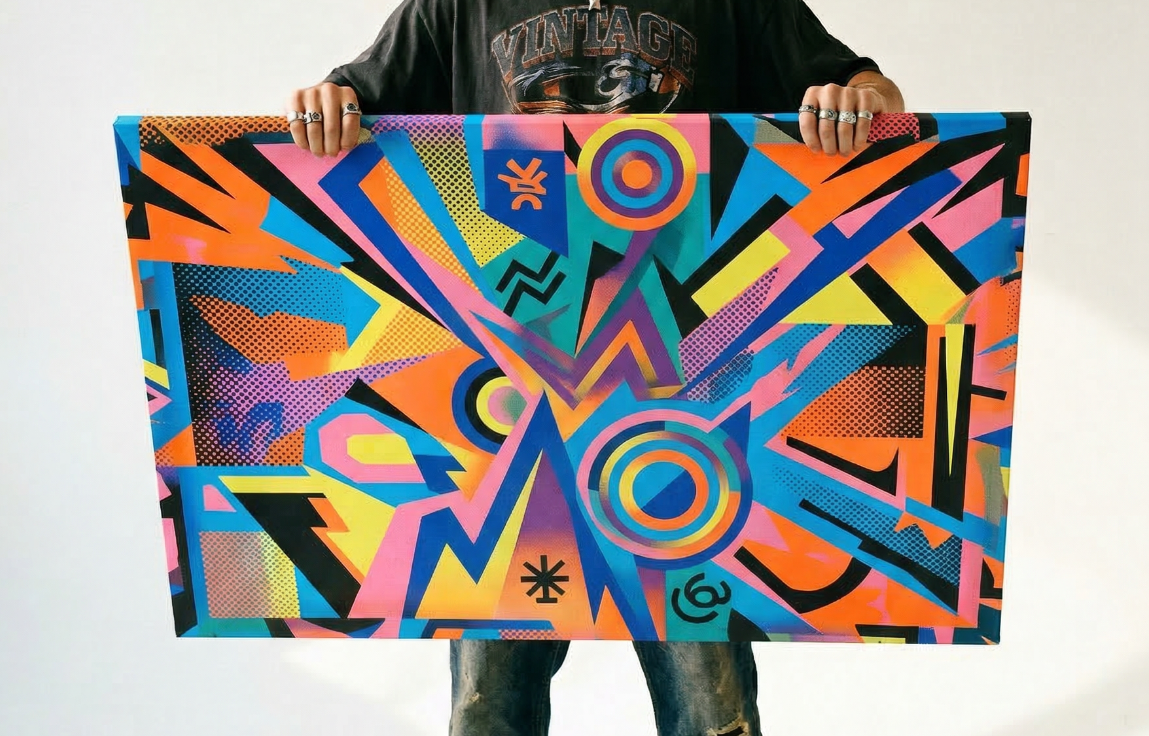
Gallery Canvas - Starting from $13.60
The same material and printing, stretched over a deeper 38mm (1.5”) pine frame. The extra depth changes how the piece reads on a wall - more substantial, more exhibition-quality, more intentional. It is the format that makes a buyer feel like they’re purchasing art rather than decor, without requiring the listing to make that argument explicitly.
For stores at the premium end of the market, Gallery Canvas is the right format. It also works exceptionally well for gifting, where the physical presence of the product needs to communicate value before the buyer even sees the print.
Available in cotton or polyester. Sizes from 20×20 cm to 200×100 cm.
Rolled Canvas - Starting from $7.40
Printed on the same material as the stretched versions, but shipped without a frame - rolled into a durable tube. Lower base price, lower shipping cost, suited to buyers who prefer to frame their own work or who want a large-format print that standard frames can’t accommodate.
Important: rolled canvas is not cut edge to edge. Extra material is included on the sides for stretching. This matters for how you describe the product and set size expectations in your listing. The buyer who discovers the difference after ordering is not the buyer who leaves a good review.
Available in cotton or polyester. Sizes from 15×15 cm up to 240×120 cm - the largest format in the canvas range.
Multipanel Canvas - Starting from $11.80
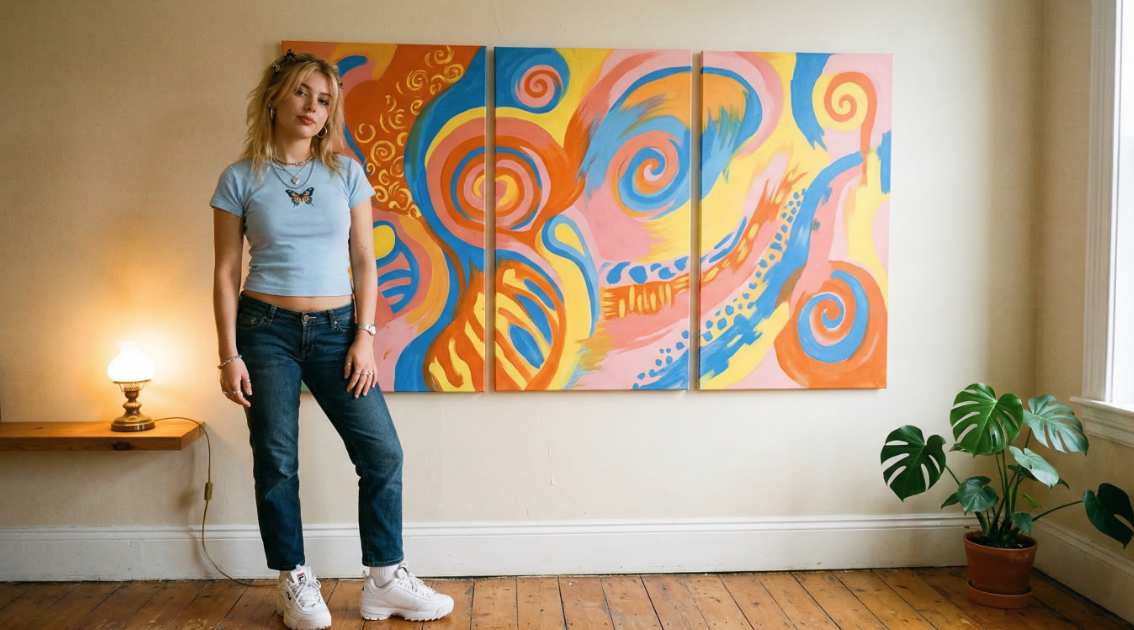
A single image divided and printed across multiple separate canvas panels. Together they create a wall-filling display that no single-frame product can match. It is a genuinely differentiated product - harder for buyers to find elsewhere, and one that photographs exceptionally well in lifestyle listing images.
Multipanel Canvas works best for panoramic photography, dramatic landscapes, and bold abstract work where the scale and spread of the image are part of the effect. If you’re building a catalog around statement pieces, it earns its place. Contact Printseekers for configuration details.
Available in cotton or polyester. Sizes from 20×20 cm to 200×100 cm.
Cotton vs Polyester: A Positioning Decision, Not Just a Material One
Cotton canvas (300 g/m²) is heavier with a natural texture. It reads as premium in hand and gives buyers who inspect the product before hanging it the tactile confirmation that they spent their money well. The right material for stores where quality is the value proposition.
Polyester canvas (220 g/m²) is lighter, more cost-effective, and better suited to volume-focused stores. The print quality is identical. For buyers who care primarily about the image rather than the material, polyester is the practical choice that keeps margins healthy.

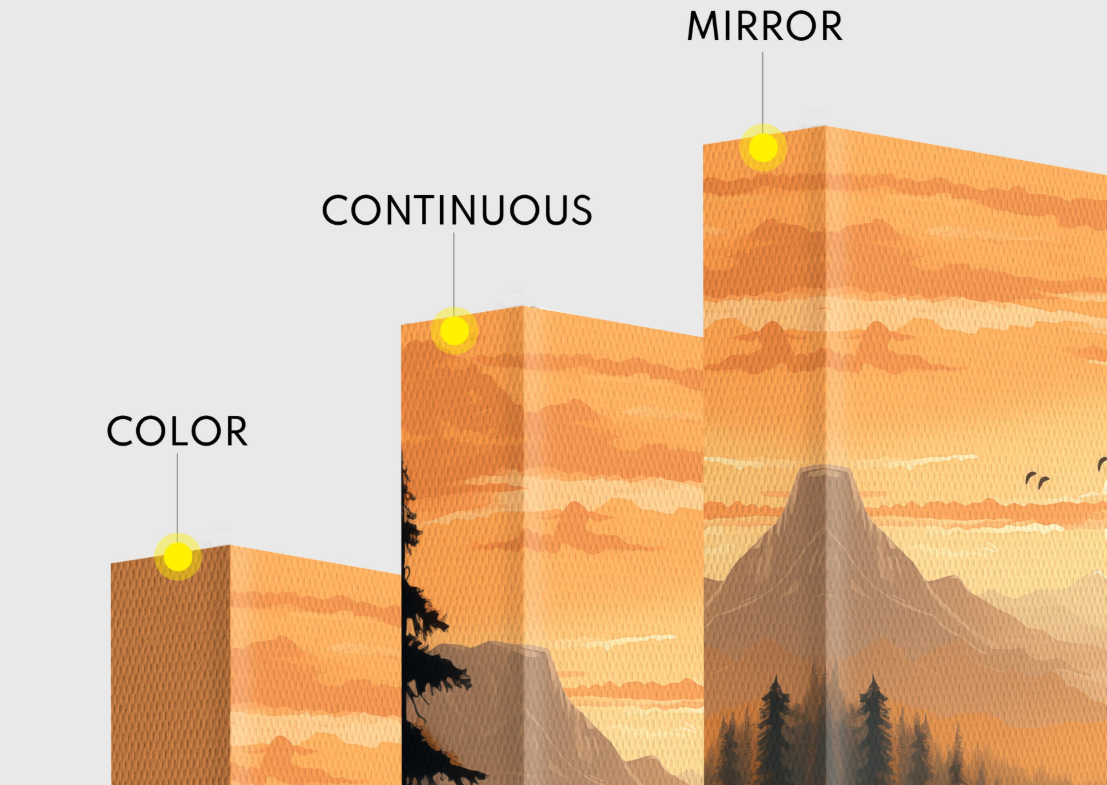
Canvas Side Options: Mirror, Continuous, or Colour
Every stretched or gallery canvas order requires a decision about how the sides are handled. This is not cosmetic - it affects the product’s appearance and what file you need to provide.
Mirror
The outer edges of your design are reflected and extended around the sides of the canvas. The most popular option and the safest default. Works for most designs because no content is lost from the front face.
Continuous
The image wraps seamlessly from front to side. The effect is clean and immersive, but 2 cm of your design (4 cm for gallery canvas) wraps around the edges and won’t be visible from the front. Keep focal points, faces, and text well within the front face area.
Colour
A solid colour fills the sides, specified as a HEX code. Simple, clean, and effective for minimalist designs. Requires the least from your file but demands that the colour choice is deliberate.
Preparing Your Design Files
Requirements
- Format: JPEG, JPG, or PNG
- Resolution: 300 DPI - going higher increases file size without improving quality
- Colour profile: RGB (sRGB) - never CMYK
- File size: maximum 2 GB
- Dimensions: Files must be submitted true to size - match the exact ordered product dimensions
- Orientation: Verify before uploading - a landscape file on a portrait canvas cannot be corrected after production
For Continuous Sides
Standard canvas: add 2 cm to each side of your file. For a 60×90 cm canvas, your file should be 64×94 cm. Gallery canvas: add 4 cm to each side, making the same canvas 68×98 cm. Keep critical design elements well within the front face area.
Maximum Sizes
- Stretched Canvas: 140 cm wide, 200 cm long
- Gallery Canvas: 120 cm wide, 200 cm long
- Rolled Canvas: up to 240×120 cm
AI-Generated Designs
Canvas surface texture makes certain AI artifacts more visible than they are on flat poster paper. Distorted edges, inconsistent details, and unnatural textures that look subtle on screen can read clearly on a large textured surface. Always check at 100% zoom before uploading.
Packaging and Shipping
Stretched and gallery canvases are wrapped in bubble wrap and boxed in sturdy cardboard. Rolled canvases ship in durable, sustainable tubes. Canvas ships heavier than posters - factor this into your pricing and shipping tier decisions, especially for larger sizes on international orders.
Frequently Asked Questions
What’s the difference between cotton and polyester canvas?
Cotton (300 g/m²) is heavier with a natural texture - the premium choice for quality-focused stores. Polyester (220 g/m²) is lighter and more cost-effective, better suited to volume-focused stores where margin efficiency matters more than material prestige.
Which format should I start with?
Stretched Canvas on cotton material. It is the most versatile format, covers the widest range of use cases, and requires no specialised brand positioning to justify mid-to-premium pricing.
Can I split one image across multiple canvases?
Yes. That is exactly what Multipanel Canvas is for. Contact Printseekers for configuration details before listing.
Are the canvases eco-friendly?
Yes. All Printseekers canvas products are PVC-free, produced with environmentally conscious materials and processes.
What shipping options are available?
Three tiers: Economy via DHL Global Mail (5–12 business days), Standard via FedEx (2–7 business days), and Express via FedEx (2–3 business days).
Do I need different files for different side options?
Only for continuous sides, where you need to extend the file to account for the wrap. Mirror and colour sides use the standard product-size file.
Canvas Is the Product That's Here To Stay
Posters get changed. Canvas gets kept. That difference in how buyers relate to the product - as something permanent rather than something interchangeable - is what justifies the higher price point and generates the kind of purchase that earns a five-star review and a returning customer.
The four formats cover every buyer in the wall art market: the everyday buyer who wants something ready to hang, the premium buyer who wants exhibition depth, the large-format buyer who frames their own work, and the statement-piece buyer who wants something that fills a wall and commands a room.
Printseekers offers a free sample program. Order a stretched canvas and a rolled canvas before you list. The difference between cotton and polyester, between standard and gallery depth, is something you need to hold in your hands before you sell it to someone else. Once you have, the pricing decisions make themselves.
Sign up at fulfillment.printseekers.com/signup to connect your store and start fulfilling canvas orders today.


