


The passepartout - a wide white mat between the print and the frame - has been the standard presentation method in galleries and museums for over a century. Not because it is decorative, but because it works.
The mat creates a border of negative space that draws the eye into the image, separates the artwork from the frame, and signals that what’s inside is worth looking at. It is one of those conventions that has lasted because the visual logic behind it is sound.
What galleries understood a long time ago, the wall art market is catching up to: buyers notice the difference between a print that arrives in a frame and a print that arrives presented. The mat is the difference. It is also a commercial opportunity. A passepartout costs more to produce than a standard framed print and justifies every dollar of it in the buyer’s hands. For print on demand sellers, that perceived value gap - between what it costs to produce and what a buyer is willing to pay - is where the margin lives.
This guide covers everything: how the product is made, the full frame range, sizes and pricing, what designs work best, file requirements, and what you need to know before listing.
What Print on Demand Passepartouts Are
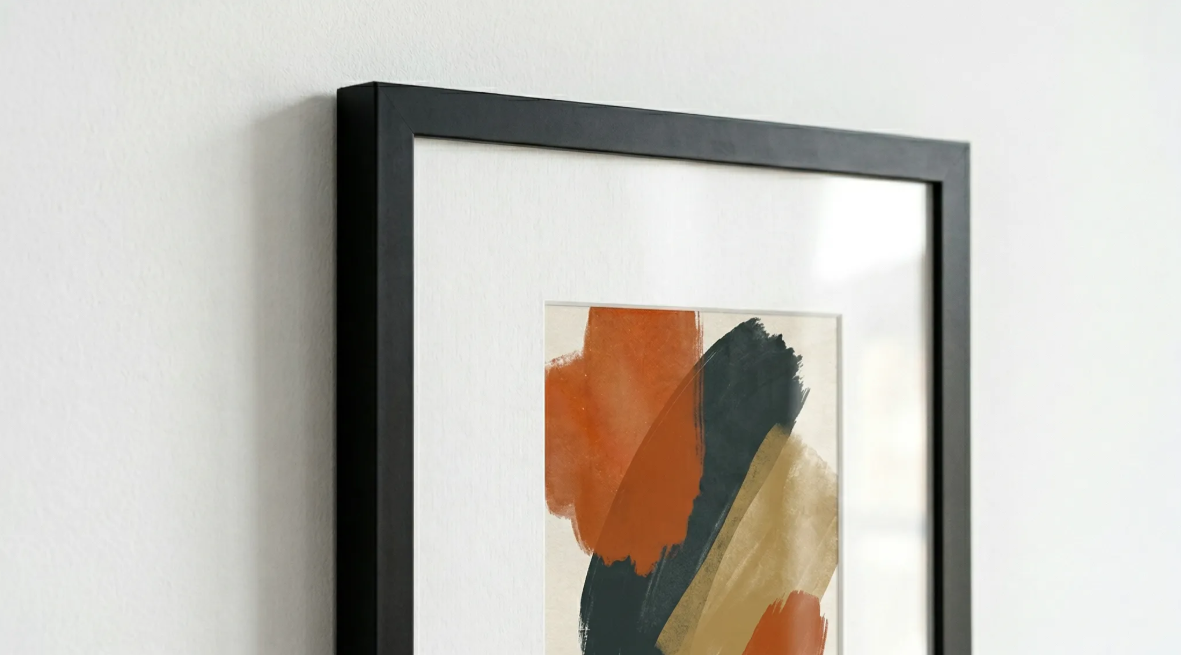
Three components assembled into one ready-to-hang product: a print on Epson Enhanced Matte paper (230 g/m²), a white passepartout mat, and a frame with plexiglass front. The mat width scales with the size of the product - from 4 cm on the smallest (30×40 cm) up to 7 cm on the largest (60×120 cm) - so the presentation always looks proportional rather than cramped.
Printing uses Epson Fine Art pigment ink with giclée production standards - archive-grade quality that won’t fade or degrade over time. Plexiglass rather than glass keeps the product lightweight and significantly reduces breakage risk in transit. Every passepartout arrives fully assembled with a sawtooth hanger already attached. The buyer unpacks it and hangs it. Nothing else required.
Why Passepartouts Work in a POD Store
The perceived value argument is straightforward: a white mat makes a print look more expensive. Not because of any illusion, but because gallery-style presentation genuinely elevates what’s inside it. Buyers who would pay $40 for a framed print will pay $60–$80 for the same design in a passepartout - and feel good about the difference, because the product justifies it.
The upsell case is also strong. A store that sells prints can add passepartouts as a premium tier without changing its design catalog. The same image, the same file, a different product listing - and a significantly higher average order value. For sellers already operating in the wall art space, it is the lowest-friction way to increase revenue per customer.
The frame range also gives the product breadth. Twelve finishes covering contemporary, classic, ornate, and natural aesthetics means the same design can be listed across multiple frame options, each targeting a different buyer or interior style. That catalog depth, from a single uploaded design, is one of the more underrated advantages of the passepartout format.
The Frame Range
Twelve frame finishes, grouped broadly by aesthetic. All share the same white passepartout mat, the same paper, and the same production quality. The frame is a positioning decision, not a quality distinction.
Contemporary
Black, White. Clean, minimal frames that work in modern and Scandinavian-influenced interiors. The most versatile options in the range - they don’t compete with the artwork or the room. Black suits bold, high-contrast designs. White suits softer, lighter work and rooms with neutral walls.
Natural Wood
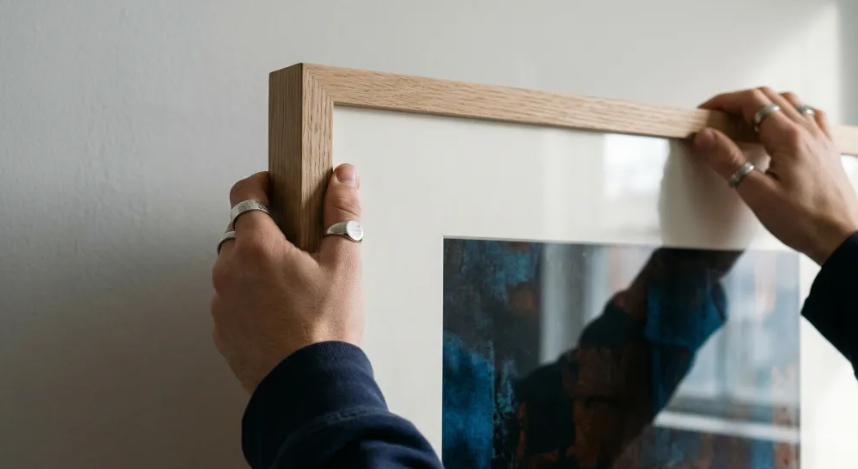
Wood, Dark Wood. Warm-toned frames that bring a natural, organic quality to the presentation. Wood suits botanical prints, landscape photography, and any design where the frame being warm rather than cool reinforces the image. Dark Wood is deeper and more dramatic - suits darker, moodier work and richer interior palettes.
Gold
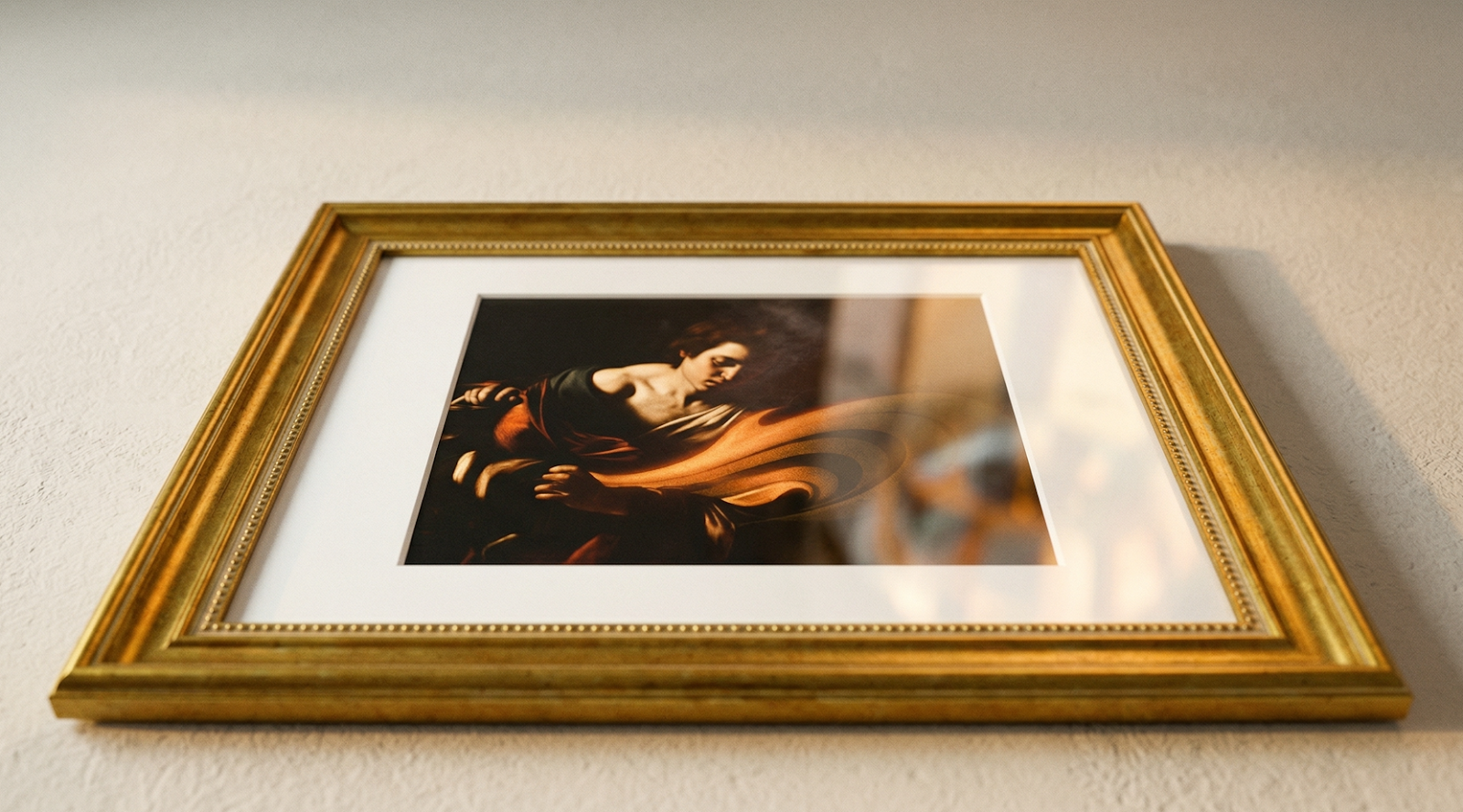
Modern Gold, Pure Gold, Vintage Gold, Retro Gold. Four takes on gold, covering the full range from sharp and contemporary to classic and ornate. Modern Gold is cleaner and brighter - suits contemporary interiors where a touch of warmth is wanted without the weight of a traditional gold frame. Vintage Gold and Retro Gold are warmer and more textured, suited to more traditional interiors and vintage-influenced design. Pure Gold is the most striking - bold, high-presence, suited to designs and rooms that can carry it.
Metallic and Ornate
Bronze, Vintage Bronze, Vintage Silver, Retro Black, Retro White. The broadest group in terms of character. Bronze and Vintage Bronze bring warmth and weight - suited to fine art reproductions, botanical illustrations, and interiors with an antique or collector sensibility. Vintage Silver is cooler and more refined. Retro Black and Retro White have a slightly heavier profile than the contemporary equivalents - suited to buyers who want a more substantial-looking frame without moving into ornate territory.
View the full range here.
Sizes and Pricing
- 30 × 40 cm (12 × 16”) - $26.80
- 50 × 70 cm (20 × 28”) - $51.50
- 60 × 90 cm (24 × 36”) - $69.60
- 70 × 100 cm (28 × 40”) - $78.60
- 60 × 120 cm (24 × 47”) - $81.30
The mat width scales with the size: 4 cm at 30×40 cm, up to 7 cm at 60×120 cm. This matters for file preparation - the print dimensions are smaller than the overall product dimensions, and the design needs to be sized to the print area, not the frame.
What Designs Work in a Passepartout
The mat changes how a design reads. It adds breathing room around the image, which means designs that feel tight or busy at the edge of a standard frame look considered and intentional inside a passepartout. This is an advantage for detailed work - botanical illustrations, fine art photography, architectural drawings, typographic prints with generous negative space. The mat extends that negative space and reinforces it.
Minimalist designs perform particularly well. A simple composition - a single motif, a short phrase, an abstract form - can look sparse in a standard frame and quietly confident inside a passepartout. The mat does the visual work that the design doesn’t.
Photography, both colour and black-and-white, consistently suits the format. The gallery reference is direct: a well-chosen photograph in a passepartout reads as fine art rather than decor, which shifts how the buyer positions it in their home and how much they are willing to pay for it.
One design consideration: because the mat is always white, designs with white or very pale backgrounds will have less visual separation between the print and the mat. This is not always a problem - it can create a seamless, airy effect - but it is worth checking in a mockup before listing. Stronger separation happens with designs that have a defined edge or a coloured background.

Preparing Your Design Files
- Format: JPEG, JPG, or PNG
- Resolution: 300 DPI
- Colour profile: sRGB
- Dimensions: size to the print area, not the overall frame dimensions
- Keep important elements away from the very edge of the print - the mat sits close to the print edge and a small amount of image may be hidden behind the mat border
Giclée printing with Fine Art pigment ink means colours are reproduced with precision and longevity. As with all fine art printing, what you see on screen is an approximation - if colour accuracy is critical to the design, order a sample before listing.
Packaging and Shipping
Every passepartout ships fully assembled. Bubble wrap, a protective cardboard sheet, and a sturdy outer box. The plexiglass front rather than glass means the product is significantly lighter and less prone to breakage than glass-fronted equivalents - an advantage both in transit and for the buyer who has to handle it on arrival.
Frequently Asked Questions
What is a passepartout exactly?
A wide white mat that sits between the print and the frame, creating a border of negative space around the artwork. The same presentation method used in galleries and museums. On Printseekers products, the mat ranges from 4 cm on the smallest size up to 7 cm on the largest, scaling proportionally so the presentation always looks balanced.
How many frame finishes are available?
Twelve: Black, White, Wood, Dark Wood, Modern Gold, Pure Gold, Vintage Gold, Retro Gold, Bronze, Vintage Bronze, Vintage Silver, Retro Black, and Retro White. All share the same white passepartout mat.
Does it arrive ready to hang?
Yes. Every passepartout arrives fully assembled - print, mat, frame, and plexiglass front - with a sawtooth hanger already attached. Nothing for the buyer to assemble.
Why plexiglass instead of glass?
Plexiglass is lighter and significantly less likely to break in transit or handling. It provides the same protective function as glass without the weight or fragility. For a product being shipped internationally in volume, this matters.
What print quality can customers expect?
Prints are produced on Epson Enhanced Matte paper (230 g/m²) with Epson Fine Art pigment ink using giclée production standards. Archive-grade quality - the print won’t fade or degrade over time under normal display conditions.
Is there a minimum order?
No. Each passepartout is produced individually on demand.
Can I order a sample?
Yes. Order before listing - the difference between frame finishes and the quality of the mat and plexiglass are things worth experiencing in person before selling to customers.

The Mat Is the Margin
Passepartouts are the product that makes a print look like it belongs in a collection rather than a catalog. The white mat is a small physical detail with a significant effect on perceived value - and perceived value is what determines how much a buyer is willing to pay.
For sellers who are already in the wall art space, adding passepartouts is a straightforward margin expansion. The same designs, a different product, a noticeably higher price point that the product earns without requiring explanation in the listing.
Twelve frame finishes, five sizes, archive-grade printing, plexiglass, ready to hang. Start with a sample to understand what you’re selling, then list with confidence.
Sign up at fulfillment.printseekers.com/signup to connect your store and start fulfilling passepartout orders today.


.png)


